
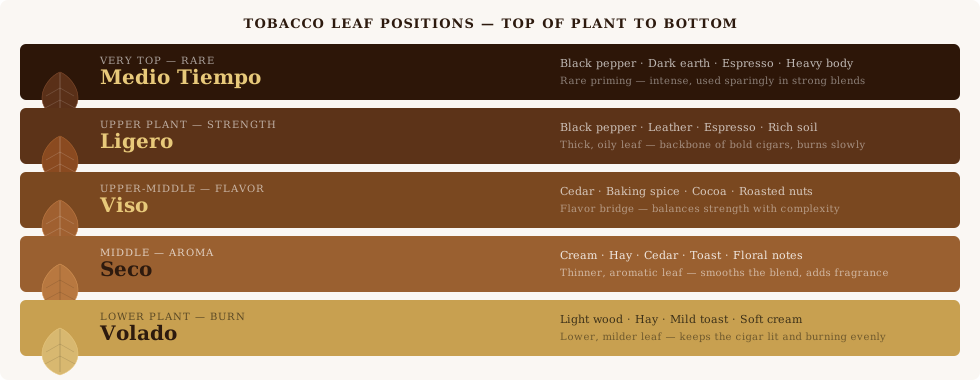
Why Leaf Position Matters
A tobacco plant does not produce one uniform leaf from top to bottom. The leaves at the top of the plant receive more sunlight, mature longer, and become thicker, oilier, and stronger. The leaves at the bottom receive less sun, mature earlier, and tend to burn more easily but with milder flavor.
This is why cigar blenders talk about specific leaf positions. Each position contributes something different to the cigar. Top leaves bring strength and intensity. Middle leaves bring flavor and aroma. Lower leaves help the cigar burn cleanly. A great cigar is built by layering these contributions thoughtfully.
Medio Tiempo — Rare Power
Medio Tiempo is a rare upper priming that does not appear on every tobacco plant. When it is present and used in a blend, it adds exceptional intensity: black pepper, dark earth, espresso, dark cocoa, and leather with heavy body.
Think of Medio Tiempo as the high-proof spirit of the tobacco world. It is powerful and concentrated, used carefully and sparingly. Too much overwhelms a cigar. The right amount adds depth and presence that experienced smokers recognize immediately.
Medio Tiempo is best suited to smokers who already enjoy full-strength cigars and want something with extra character.
Ligero — Strength and Body
Ligero leaves grow near the top of the plant. They receive more sunlight than any other priming below Medio Tiempo, which makes them thicker, darker, oilier, and slower to burn. Ligero is the primary driver of strength and body in a premium cigar.
Flavors from Ligero tend toward black pepper, leather, rich soil, espresso, and dark cocoa. Because it burns slowly, blenders often place Ligero near the center of the filler so the surrounding tobaccos help it combust evenly.
If a cigar feels bold, spicy, and heavy, Ligero is likely a significant part of the reason. It gives the blend its backbone.
Viso — Flavor and Balance
Viso grows in the upper-middle portion of the plant. It is not usually as strong as Ligero, but it carries more flavor than the lighter lower leaves. Viso is often described as the flavor bridge of the cigar — the leaf that connects strength to smoothness.
Common Viso flavors include cedar, baking spice, sweet pepper, cocoa, roasted nuts, and balanced earth. This is the leaf that often makes a medium or medium-full cigar interesting without making it overwhelming.
Viso works well for most cigar smokers, including beginners who are ready to move beyond mild cigars into something with more character.
Seco — Aroma and Smoothness
Seco leaves come from the middle to lower-middle section of the plant. They are thinner and more aromatic than the upper primings. Where Ligero provides strength, Seco provides fragrance and smoothness.
Flavors from Seco tend toward cream, hay, cedar, toast, floral notes, and mild sweetness. A well-balanced cigar with a good Seco contribution often feels softer, more approachable, and more aromatic from the first draw.
Seco is a key leaf for making a blend feel refined rather than rough. It is not the loudest voice in the blend, but it is often the one that makes the cigar pleasant to smoke from start to finish.
Volado — Combustion and Burn
Volado grows at the lower part of the plant. These leaves mature earliest, receive the least intense sun, and are thinner and milder than anything above them. Their primary job is not to contribute bold flavor — it is to help the cigar burn.
Flavors from Volado are subtle: light wood, hay, mild toast, soft cream, gentle earth. On their own they are understated. But in a blend, they are essential. A cigar without good combustion-supporting leaf will go out, burn unevenly, or require constant relighting.
Volado is the quiet contributor that makes everything else work. Even the most powerful full-strength cigars rely on proper combustion leaf to deliver their flavor correctly.
How Blenders Use These Leaves Together
A cigar blend is built by deciding how much of each leaf type to include. The goal is balance: enough strength to satisfy, enough flavor to interest, enough aroma to reward, and enough combustion to perform reliably.
A mild and creamy cigar might use mostly Seco and Volado with limited Ligero. A full-bodied powerhouse might lean heavily on Ligero and Viso with a small Volado base for burn. A medium cigar might split the difference with a Viso-heavy core that delivers complexity without overwhelming nicotine impact.
The wrapper and binder then add their own character on top of the filler blend. But the filler is where the blender makes the most fundamental decisions about what the cigar will feel like from the first draw to the last.