Why the wrapper matters so much
The wrapper is the outermost leaf of a cigar and accounts for somewhere between 30 and 60 percent of the total flavor, despite being just one of three layers (filler, binder, wrapper). It is the most expensive part of the cigar to grow, the most difficult to roll, and the first thing a tobacco buyer evaluates when assessing quality.
Wrapper leaves are grown under shade cloth or in shaded valleys specifically to slow their growth, producing leaves that are thinner, silkier, and more supple than sun-grown tobaccos. The color of the finished leaf reflects the curing and fermentation process the tobacco underwent after harvest.
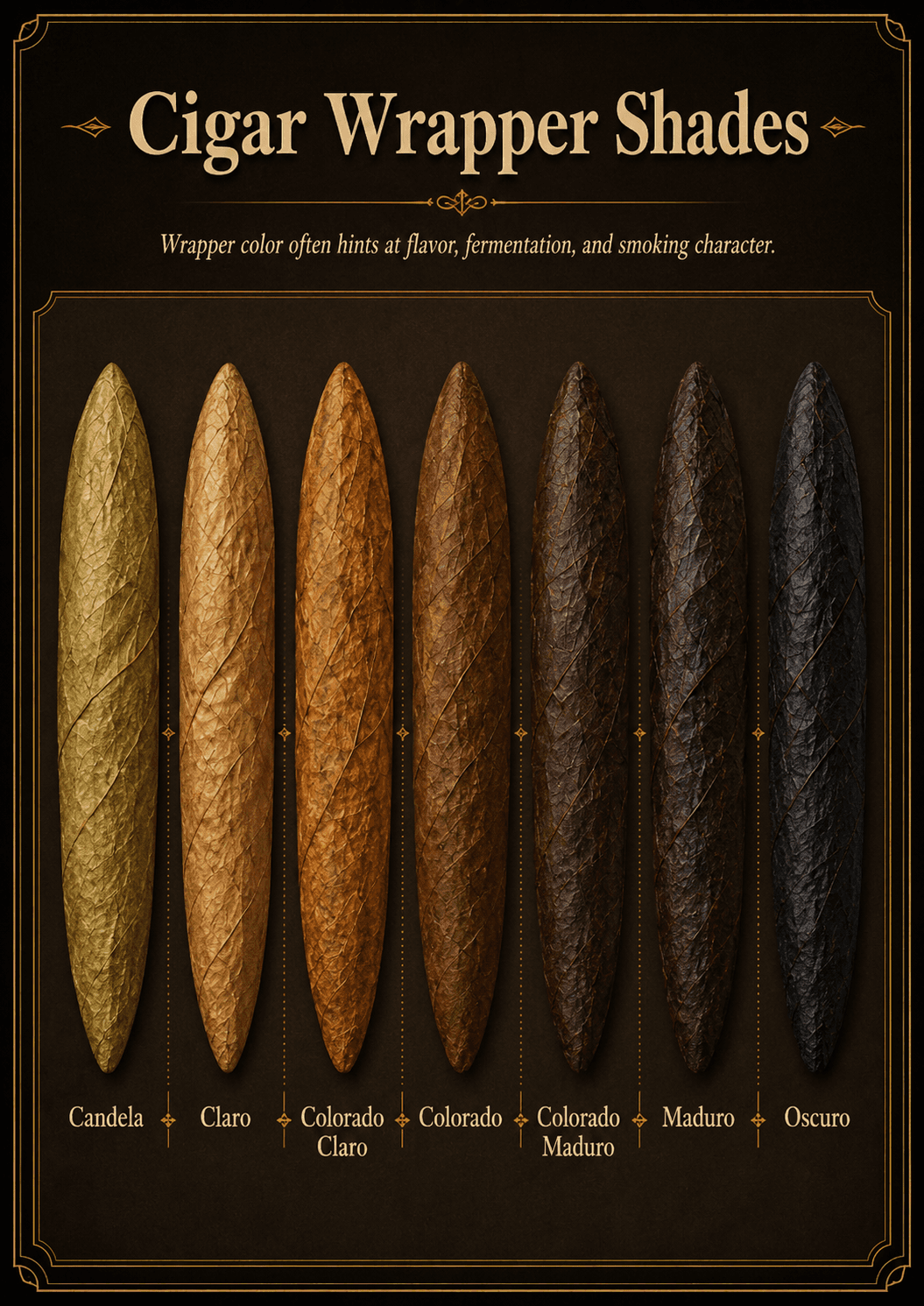
The color spectrum — light to dark
Claro is the lightest wrapper color — pale yellow-green — and is relatively rare today. It is produced by harvesting the leaf early and drying it quickly. Flavors tend to be mild, grassy, and light.
Natural (also called Colorado Claro) is the most common wrapper color: a light to medium tan that indicates a well-cured leaf. Connecticut Shade wrappers fall here — creamy, smooth, light in body.
Colorado sits in the middle of the spectrum, a rich reddish-brown. These wrappers are typically well-fermented Habano or Ecuadorian leaves and contribute earthy, spicy, balanced notes.
Colorado Maduro is darker still — a deep chocolate brown. The extra fermentation adds sweetness and complexity, often bringing out notes of dark fruit, coffee, and leather.
Maduro (Spanish for "ripe") is a very dark brown to near-black wrapper produced through extended fermentation, sometimes for several years. The long ferment breaks down harsh compounds and converts starches into natural sugars, producing a sweet, rich, sometimes chocolatey smoke that is surprisingly smooth despite its bold appearance.
Oscuro (or Double Maduro) is the darkest classification — essentially black. These wrappers are fermented the longest of all and tend to produce the boldest, most complex flavor profiles of any wrapper category.
Color is not a direct measure of strength
This is the most common misconception about wrapper color. A dark Maduro wrapper does not automatically mean a strong cigar. Many Maduros are surprisingly mild in nicotine content while delivering rich flavor. Conversely, some lighter Natural wrappers can carry a full-strength blend underneath.
That said, color gives you useful hints. Darker wrappers generally mean more fermentation, which tends to add sweetness and complexity. Lighter wrappers tend toward creamier, lighter profiles. Use color as a starting point, not a verdict.
Practical guidance at the humidor
If you are new to cigars, start with a Natural or Colorado wrapper — you will get the most representative experience of the blend without the extremes of either end of the spectrum. Once you have a reference point, try a Connecticut Shade (Claro/Natural) for something lighter, or a Maduro to explore what extended fermentation does to flavor.
At Smoky Justice, our humidor is organized to make this exploration easy. Ask to see side-by-side examples of the same brand in different wrappers — many manufacturers offer the same blend in both Natural and Maduro, which is the perfect way to taste the wrapper's direct contribution.
Common Wrapper Types and Flavor Profiles
Wrapper color and seed variety can give useful clues, but they do not tell the whole story. A dark wrapper does not automatically mean the cigar is strong, and a light wrapper does not automatically mean the cigar is weak. Strength usually comes from the whole blend, especially the filler.
Still, wrapper style matters.
Connecticut Shade
Typical color: Pale gold to light tan.
Common flavors:
Cream Cedar Hay Almond Toast Light sweetness
Beginner profile: Usually mild, smooth, and approachable.
Ecuadorian Connecticut
Typical color: Light tan to golden brown.
Common flavors:
Cream Butter Cedar Mild pepper Toast Soft nuts
Beginner profile: Often slightly more flavorful than traditional Connecticut Shade but still beginner-friendly.
Cameroon
Typical color: Reddish brown.
Common flavors:
Sweet spice Cedar Roasted nuts Floral sweetness Toast Mild pepper
Beginner profile: Great for smokers who want flavor without heavy strength.
Habano
Typical color: Medium brown.
Common flavors:
Cedar Black pepper Leather Earth Cocoa Baking spice
Beginner profile: Can range from medium to strong. Good for smokers ready for more spice and body.
Corojo
Typical color: Medium brown to reddish brown.
Common flavors:
Red pepper Cedar Rustic earth Leather Sweet spice Toast
Beginner profile: Often spicier and more assertive.
Sumatra
Typical color: Light reddish brown to medium brown.
Common flavors:
Sweet wood Baking spice Cocoa Cedar Toast Balanced earth
Beginner profile: Often a good bridge between mild and medium cigars.
Connecticut Broadleaf
Typical color: Dark brown to nearly black.
Common flavors:
Dark chocolate Molasses Espresso Rich earth Brown sugar Dried fruit
Beginner profile: Can be sweet and rich, but not always extremely strong.
Mexican San Andrés
Typical color: Dark brown.
Common flavors:
Dark chocolate Damp earth Espresso Brown sugar Mineral Pepper
Beginner profile: Usually richer and earthier. Better for smokers who already enjoy medium or medium-full cigars.
Oscuro
Typical color: Very dark brown to nearly black.
Common flavors:
Charred wood Espresso Dark cocoa Heavy earth Leather Molasses
Beginner profile: Usually not ideal as a first cigar unless the blend is specifically made to be smooth.